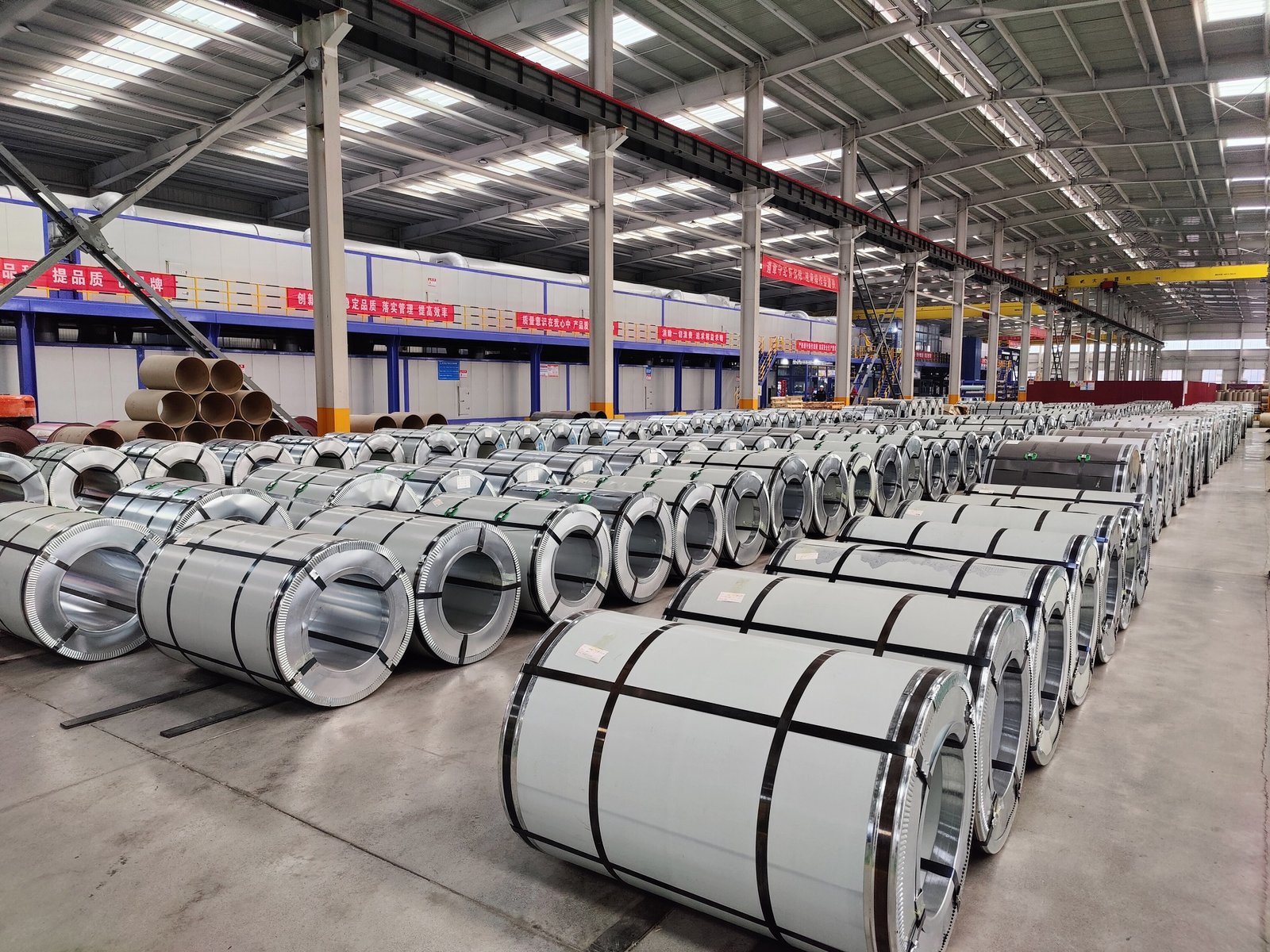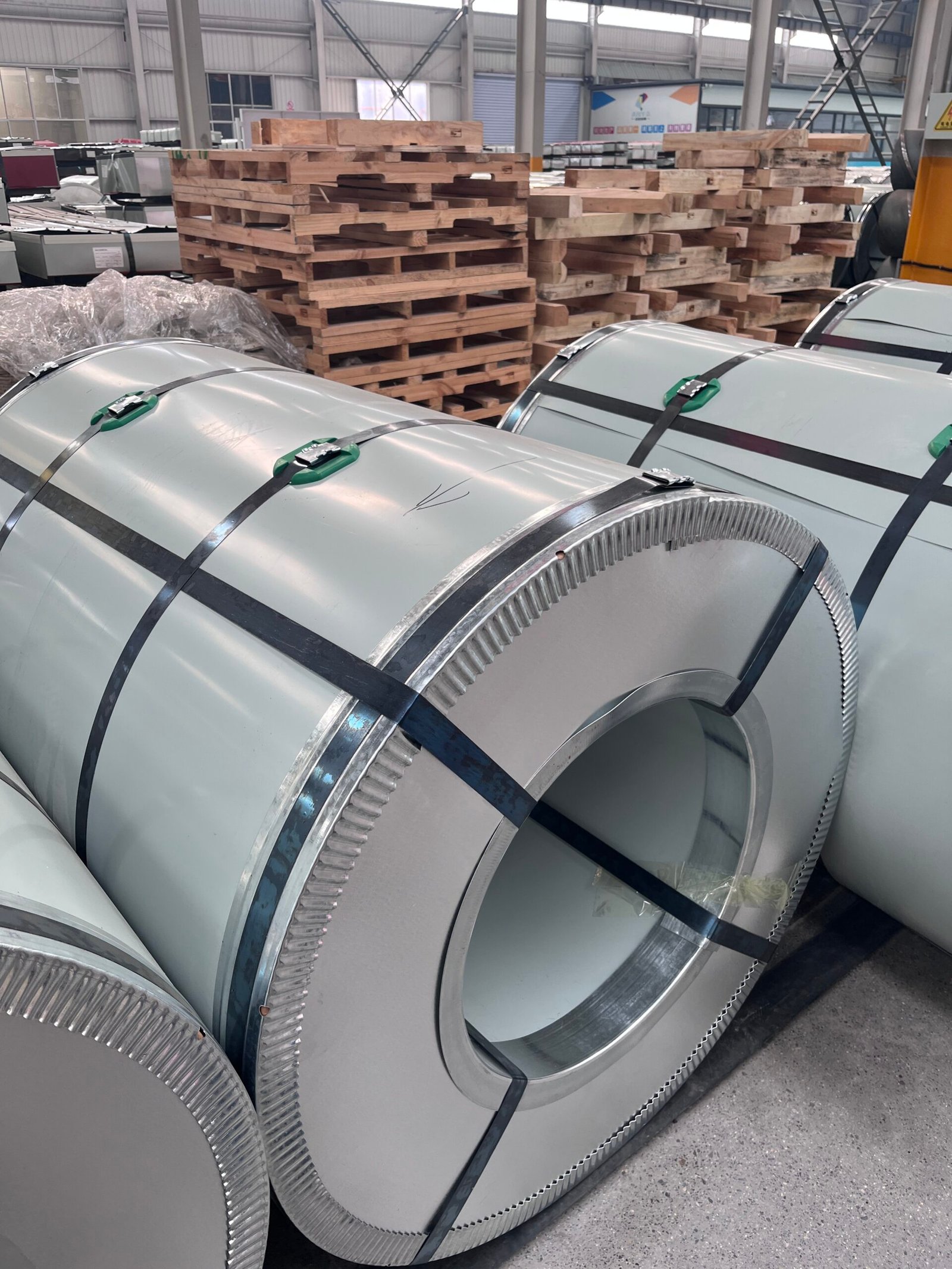
The load-bearing capacity of patterned galvanized steel coils is influenced by multiple factors such as material, specifications, zinc layer thickness, and pattern design. The typical load range is 3-10kN/㎡ (approximately 300-1000kg/㎡), which needs to be comprehensively evaluated based on application scenarios and product parameters. The following is a detailed analysis:
1、 The influence of material and specifications on load-bearing capacity
Material strength: The substrate of patterned galvanized steel coils is usually high-strength steel, such as Q235 carbon steel. These steels have high yield strength and tensile strength, and can withstand large external forces without undergoing plastic deformation. For example, the yield strength of some high-strength hot-dip galvanized coils can reach 340MPa to 950MPa, and the tensile strength can be as high as 450-590MPa or even higher, providing a solid foundation for load-bearing capacity.
Specifications and dimensions: The thickness, width, and length of patterned galvanized steel coils also affect their load-bearing capacity. Generally speaking, the thicker, wider, and longer the steel coil, the greater its load-bearing capacity. For example, patterned galvanized steel coils with a thickness ranging from 2-5mm can meet various load-bearing requirements.
2、 The indirect effect of zinc layer thickness on load-bearing capacity
Anti corrosion protection: The zinc layer acts as a sacrificial anode, prioritizing corrosion to protect the steel substrate, thereby extending the service life of patterned galvanized steel coils. Although the zinc layer itself does not directly increase the load-bearing capacity, it indirectly enhances the structural stability of the steel coil during long-term use by preventing steel corrosion.
Zinc layer thickness standard: According to relevant standards, the weight of the zinc layer on hot-dip galvanized steel plates should be between 40-600g/m ², corresponding to a certain range of zinc layer thickness. A thicker zinc layer can provide better anti-corrosion protection, but it will also increase the overall weight and cost of the steel coil. Therefore, when selecting the thickness of the zinc layer, it is necessary to comprehensively consider the anti-corrosion requirements and load-bearing capacity.
3、 The enhancing effect of pattern design on load-bearing capacity
Pattern shape and size: The pattern design on the surface of the patterned galvanized steel coil (such as diamond, tooth, etc.) can increase the friction between the steel coil and the contact surface, prevent sliding, disperse pressure, and improve load-bearing capacity. The enhancement effect of different shapes and sizes of patterns on load-bearing capacity also varies, and needs to be selected according to specific application scenarios.
Pattern distribution and density: The uniformity and density of pattern distribution can also affect load-bearing capacity. Uniformly distributed patterns can more effectively disperse pressure and improve overall load-bearing performance; If the pattern density is too high or too low, it may affect the strength and stability of the steel coil.
4、 Performance of load-bearing capacity in practical applications
Load range: According to practical application cases, the load range of patterned galvanized steel coils is usually between 3-10kN/㎡. This range can meet the needs of most industrial and building scenarios, such as factory floors, logistics platforms, municipal sidewalks, etc.
Long term stability: During long-term use, patterned galvanized steel coils can maintain stable load-bearing performance. Its anti-corrosion performance and structural stability enable steel coils to maintain good load-bearing capacity even in harsh environments, reducing replacement frequency and maintenance costs.